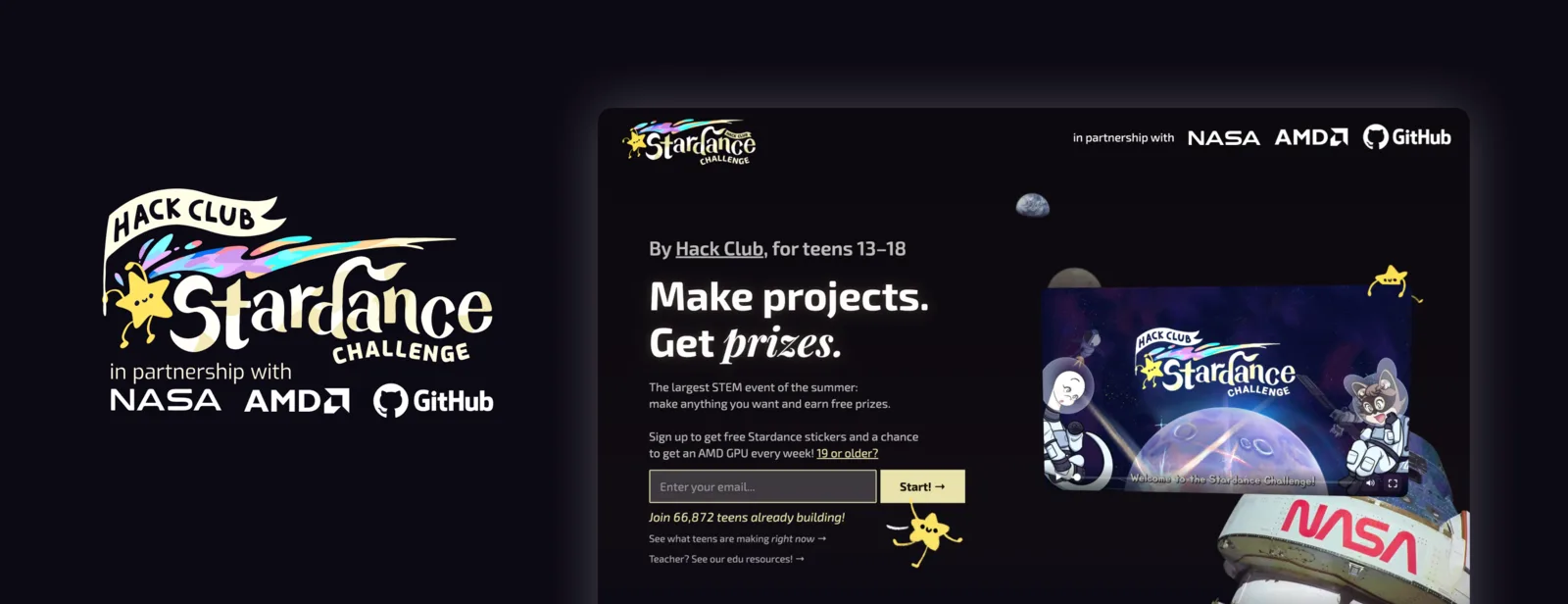
Hack Club in partnership with NASA, AMD, GitHub
Stardance Challenge
Overview
Stardance Challenge is Hack Club's summer engineering challenge for teens, run in partnership with NASA, AMD, and GitHub. Participants can build software or hardware projects and submit them in exchange for prizes, and are also encouraged to upload and document their process to share with other participants.
Stardance Challenge launched on June 1, 2026, and runs through October, with ~50,000 teen signups as of September 2026 (when I concluded my gap year and left the team.)
My role
During my gap year at Hack Club, I was one of the two core designers on the team, working on branding and UI/UX for the platform. I co-led the brand identity and the landing page, and also designed most of the core onboarding and social-media-inspired user flow.
I was also a part of the small core engineering team and implemented most of the onboarding flow, as well as additional platform features and fixes post-launch, focusing on increasing peer-referred signups and program retention.
Our team built in public, with our internal communication on a public Slack channel for the Hack Club community, so that community members could follow along and learn from how we worked.
Key decisions
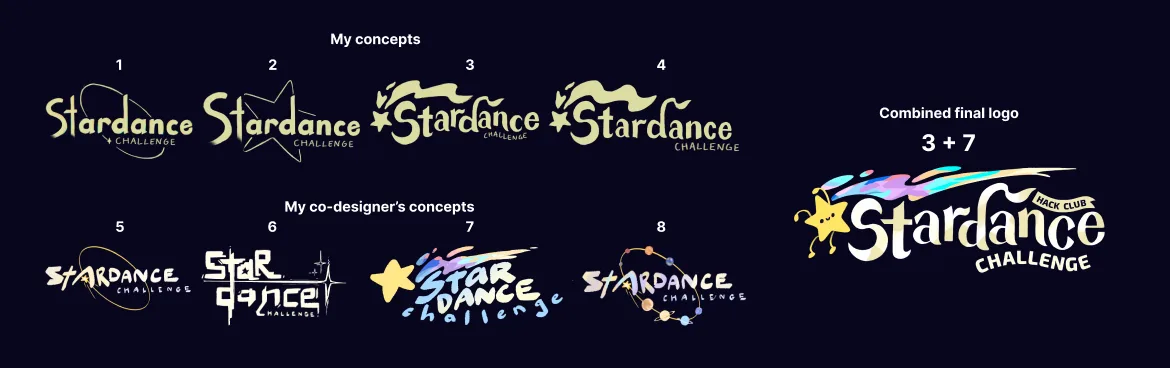
A collaborative logo — one of the first key decisions we had to make was creating the logo. The other designer and I independently came up with several designs, asked the community for feedback, then combined our best ideas, trading the file back and forth to create a logo that we were proud of.
Right before finalizing it, I added a face and limbs on a whim, and the Starling — the mascot for Stardance — was born! My co-designer then proceeded to spin off the Starling for various key pieces of art that added to the playfulness and approachability of the site.
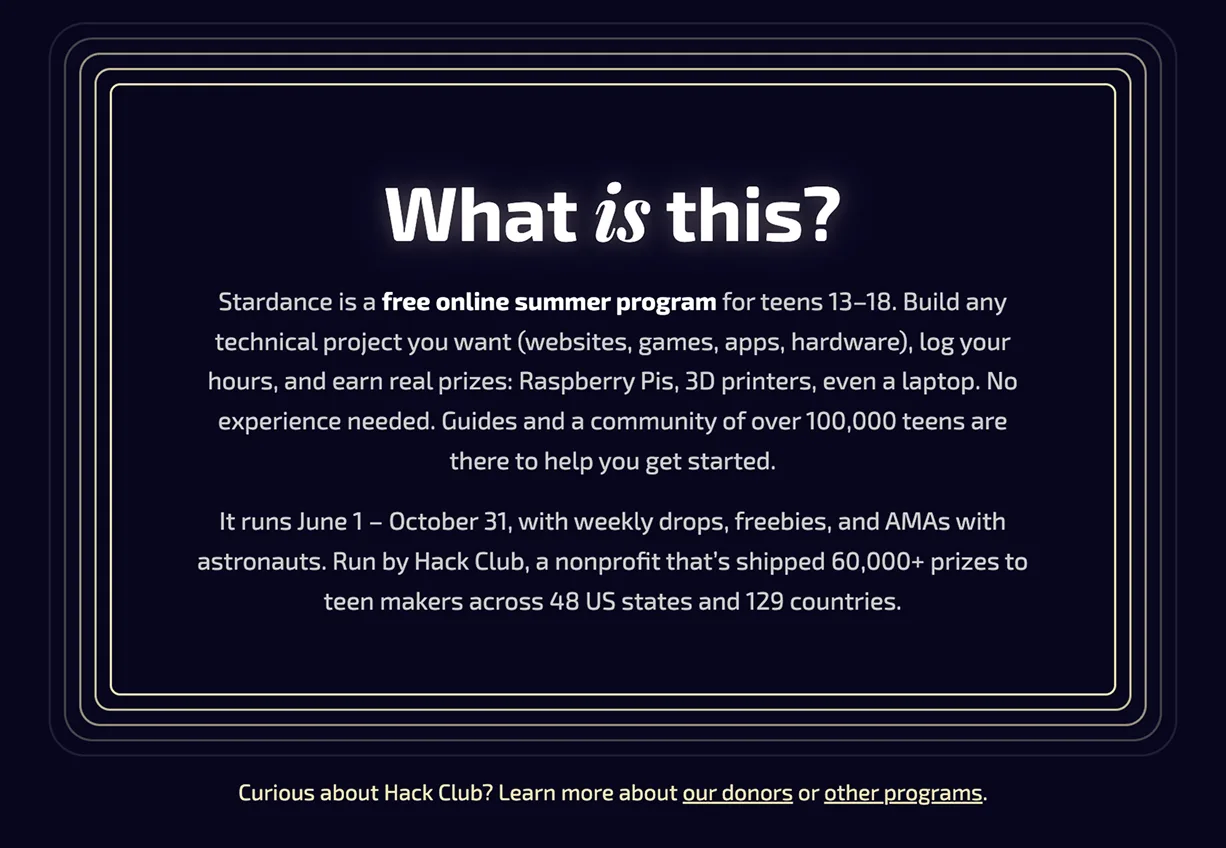
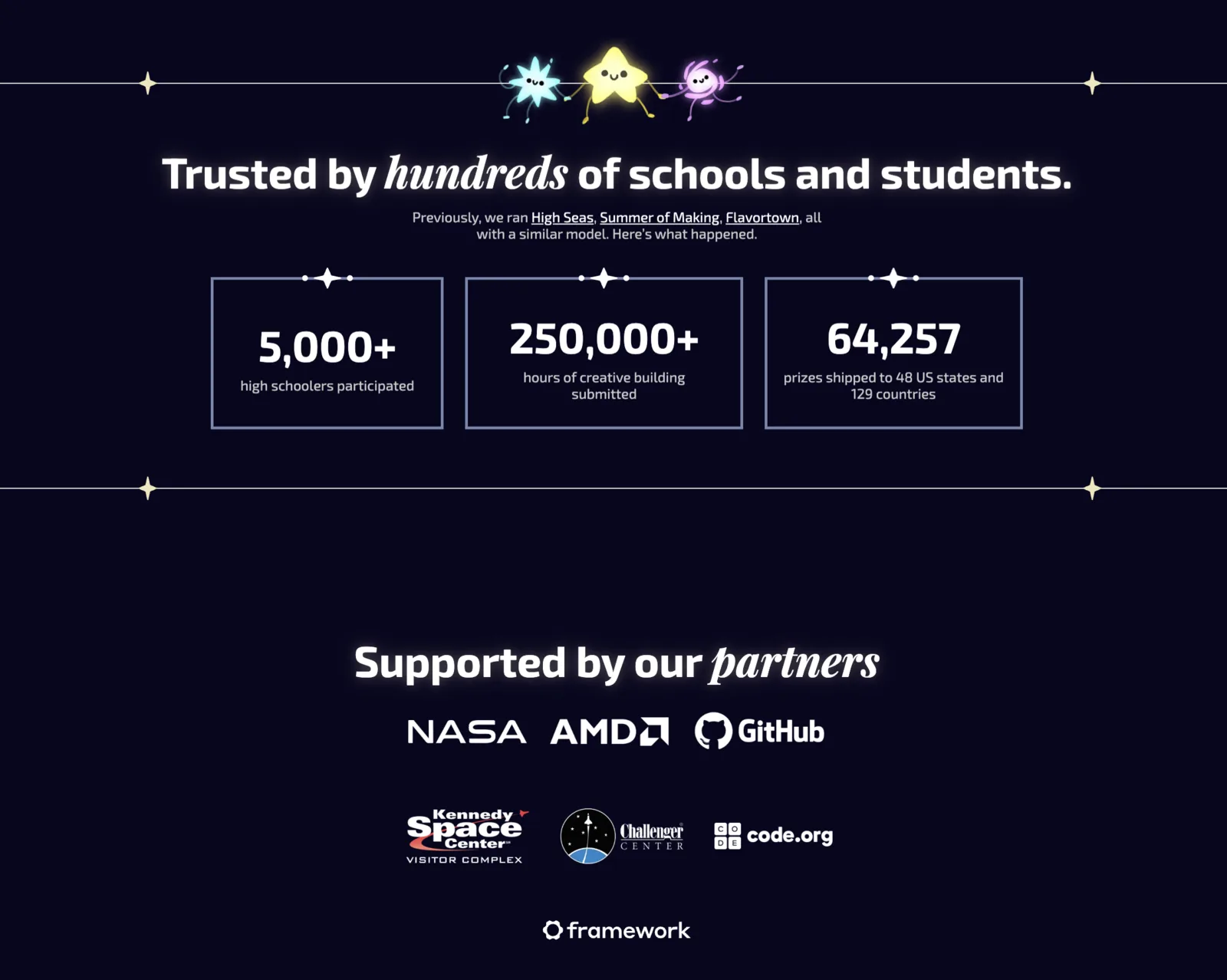
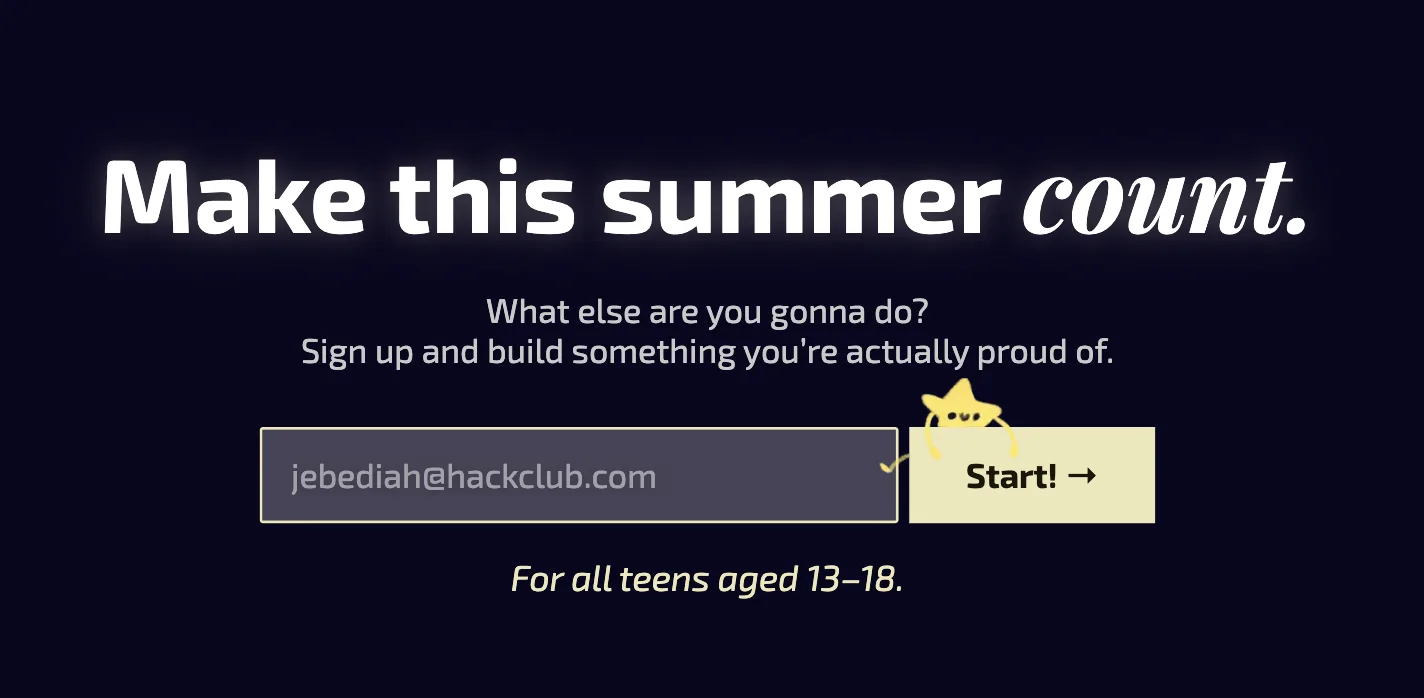
A trustworthy landing page — as we began work on the landing page, I realised that the main reason why most teens don't join Hack Club (the same reason that stopped me from joining when I first found it) was the feeling that Hack Club programs were too good to be true. How could we make a "get free things!!" program sound legitimate?
The page needed to establish credibility quickly. We decided to place our partner logos front and center, create a dedicated section for our sponsors and donors, as well as include numbers and statistics from previous iterations of the program.
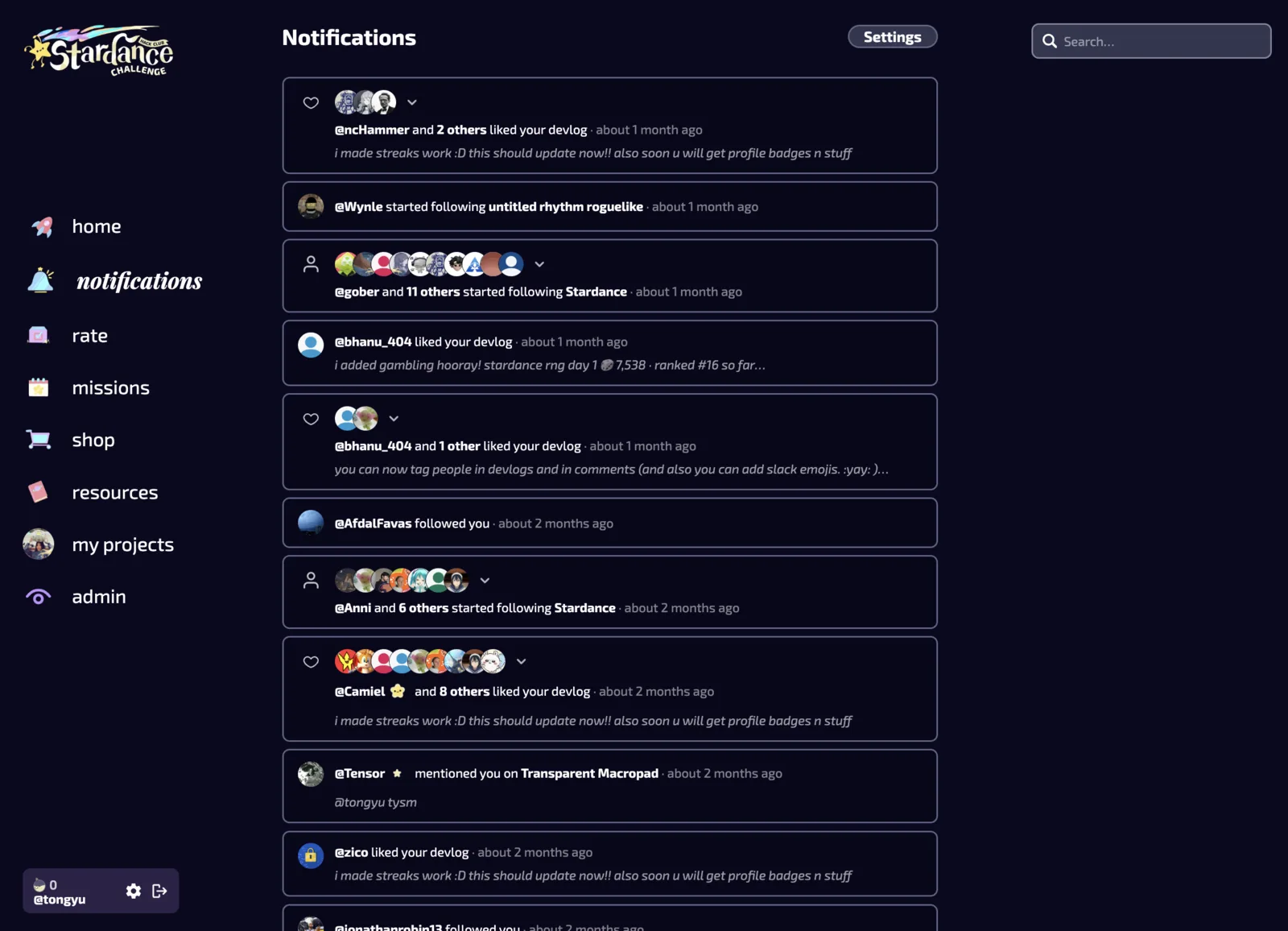
A platform that bustles with life — when brainstorming the platform UI, I realised that what makes me the most motivated and creative is when I feel inspired by what others make. There was also the appeal of doomscrolling that could keep people on the platform and inspired, as well as the dopamine hit from receiving likes/comments that would encourage participants to keep working on their projects.
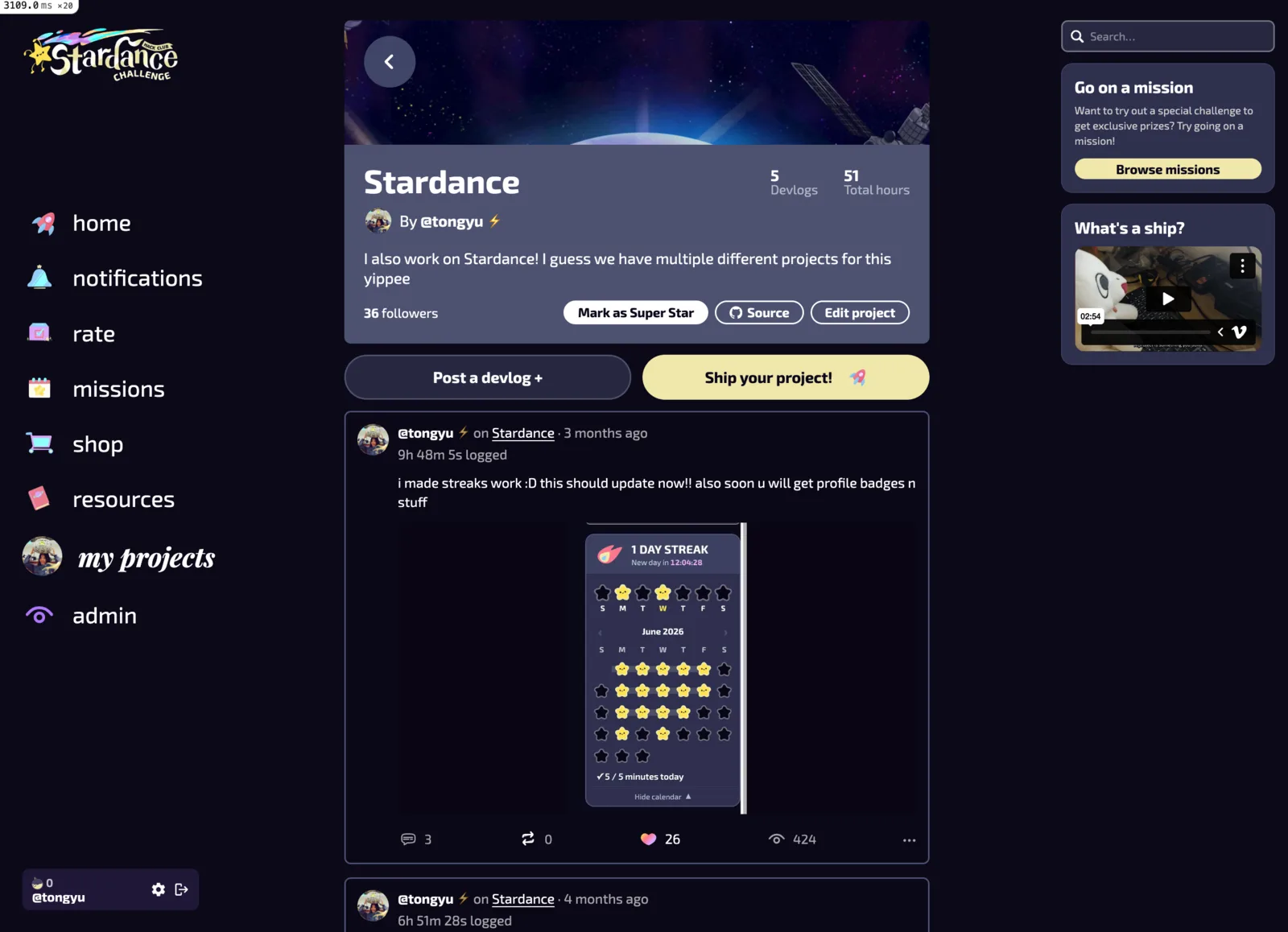
As I started designing, I modeled the UI after Twitter(X)/Bluesky. I created a home feed with like/comment/repost features on posts, a large and easy textbox for writing and posting, as well as notification tabs and profile customization. After launch, we kept modifying and reducing friction to increase user retention, adding keyboard shortcuts and juicy animations and badge notifications.
Other features
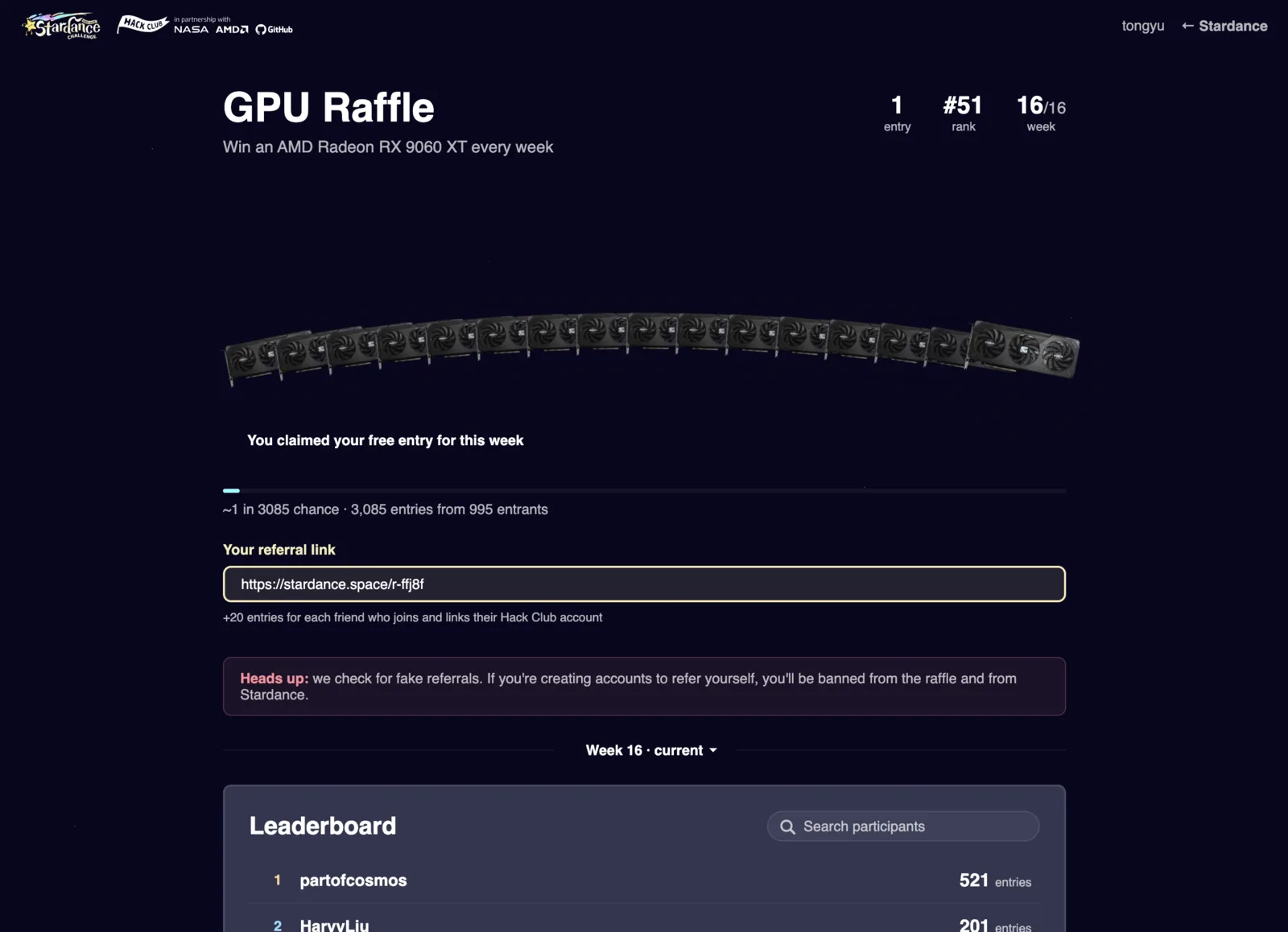
We also spent countless hours improving the onboarding flow, adding campaigns and streaks and minigames and referral raffles to increase signups. I hadn't realized just how many features we added in the span of 3-4 months as a tiny team, but the small team size and independence meant that we were very agile and could prototype, iterate, and ship in a matter of days. Here are a few snapshots of other features I worked on:
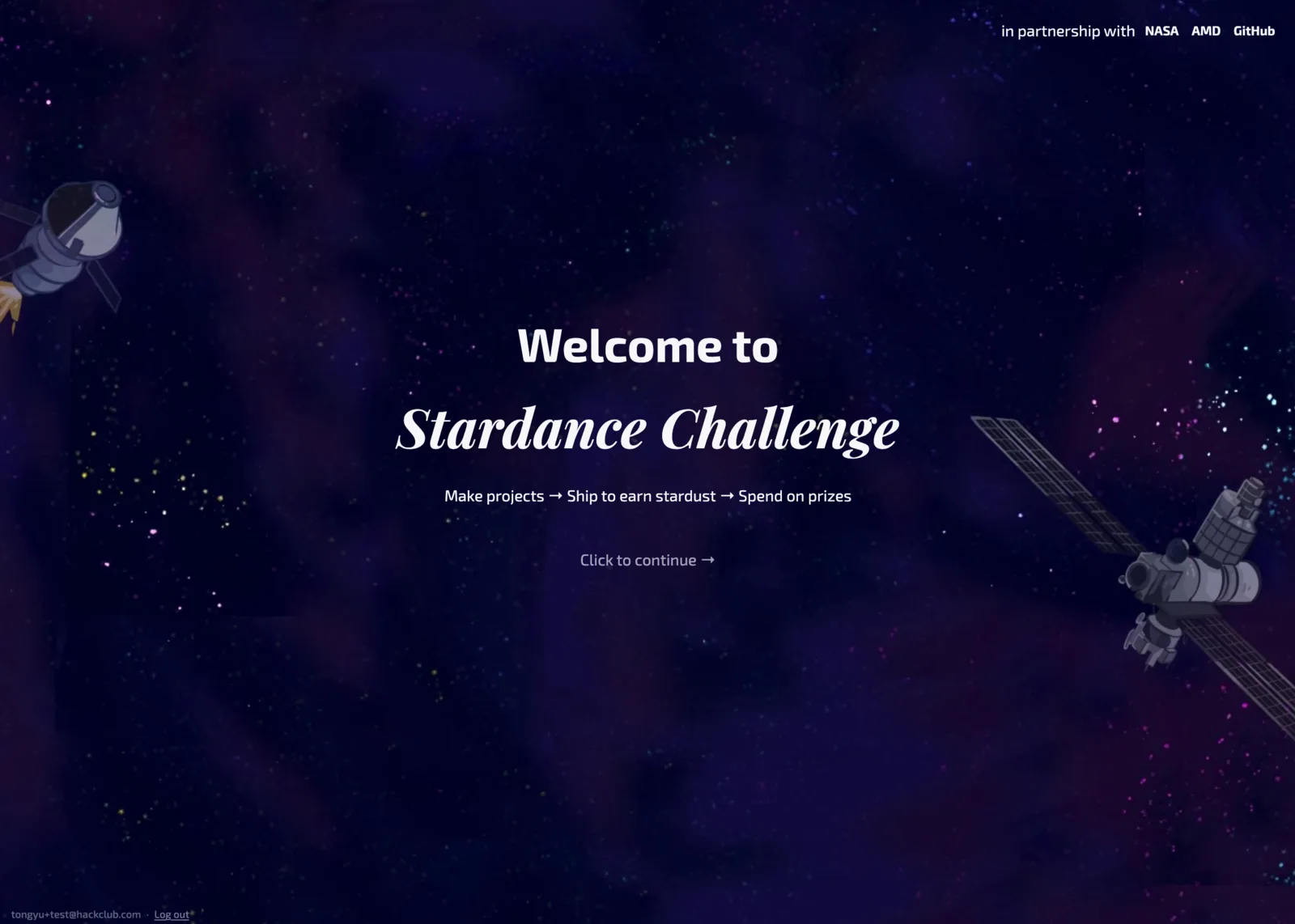
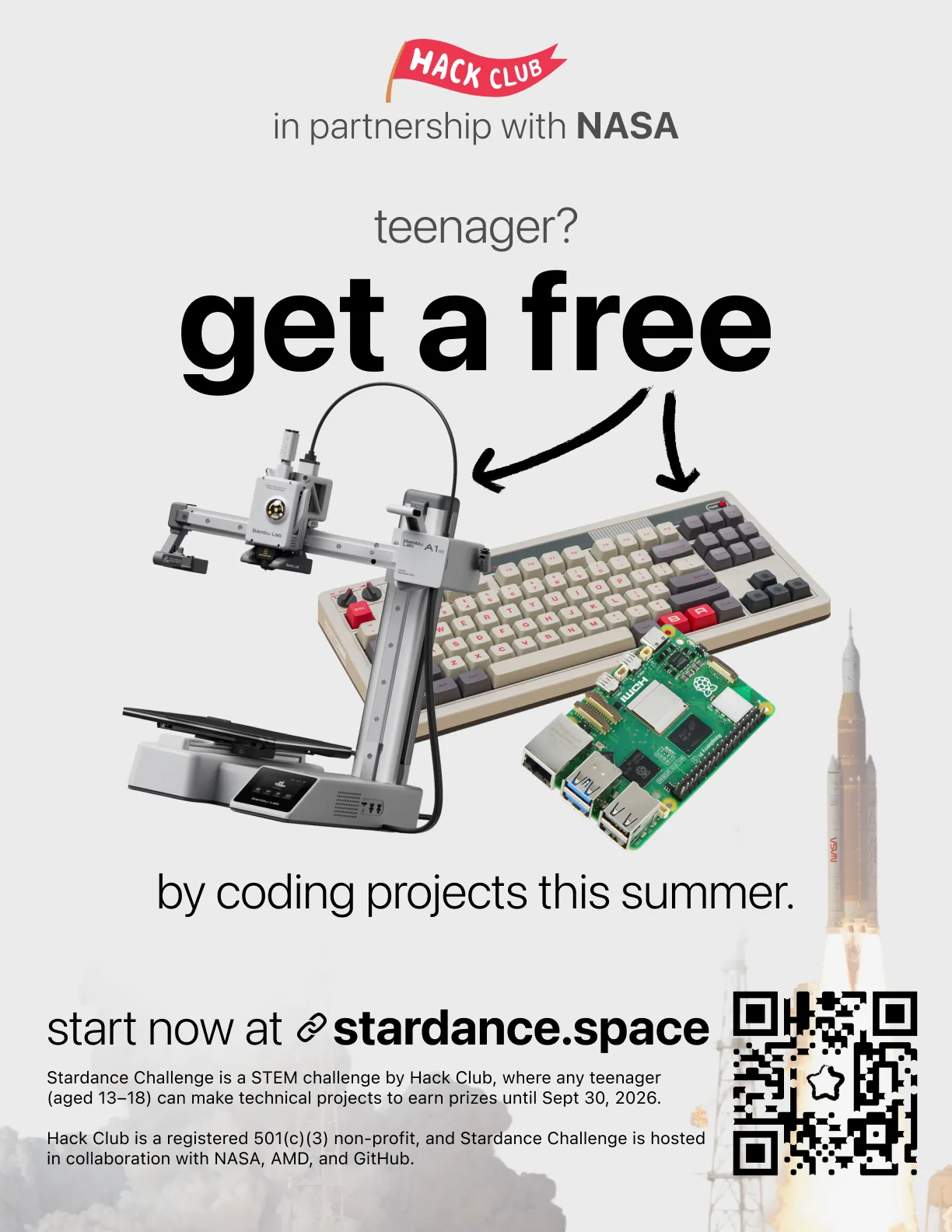
2. An onboarding flow that matched users to their skill levels and preferences to show them relevant tutorials and projects.
3. Posters that were mailed to thousands of schools.
Reflection
Working on Stardance Challenge was incredibly fun and fulfilling, and there are so many areas of it that I have not been able to cover in-depth. I learnt to work in a larger team, to organize my code and build upon other people's code. I learnt to navigate constraints set by our partners, but also to create a new design language from scratch and get over the intimidating blank page.
Built with Olive, Kai Ling, Kartikey, Max, and the rest of the Stardance team at Hack Club. Thank you for an unforgettable summer.
Visit stardance.hackclub.com to see it in action :)